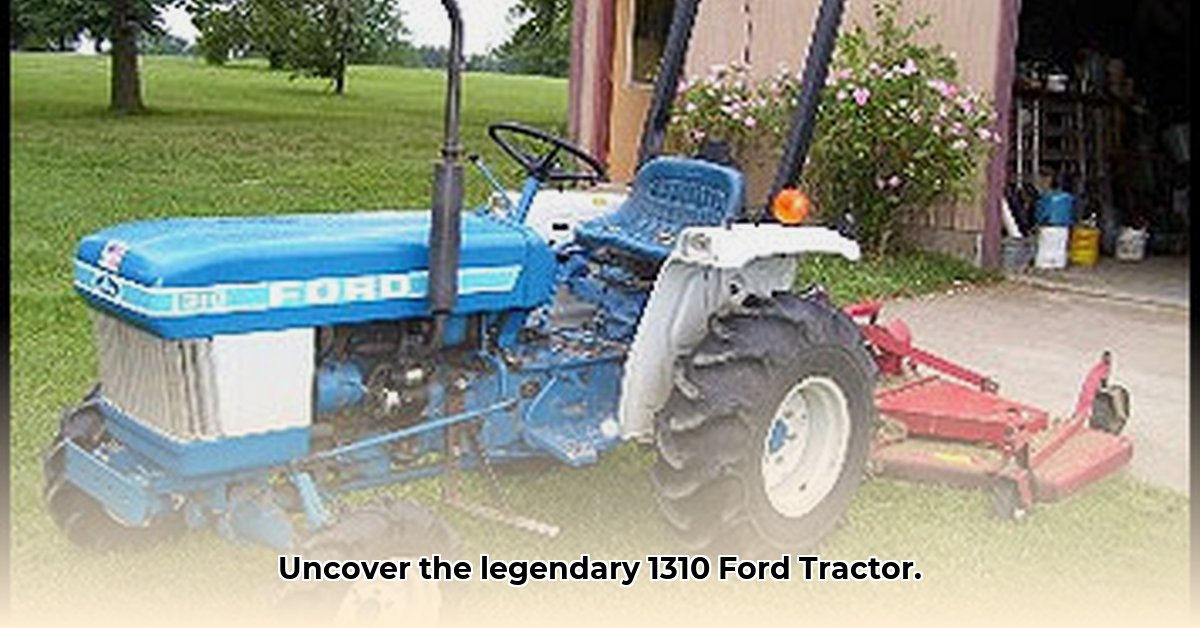
The Ford 1310 tractor, a compact utility machine produced from 1983 to 1986, holds a unique place in agricultural history. While not a powerhouse, its reliable performance and affordable price made it a favorite among small farmers and landowners. For more information on similar Ford tractors, check out this useful resource. This comprehensive guide delves into its history, specifications, maintenance, and restoration, providing insights for both seasoned mechanics and interested enthusiasts.
A Look Back: The 1310's History
Contrary to its name, the Ford 1310 wasn't built by Ford itself. Instead, it was manufactured by Shibaura (later Kubota), a renowned Japanese engineering firm. This collaboration reflects the international nature of the agricultural equipment industry, even decades ago. The 1310’s design reflected the technological landscape of the 1980s, prioritizing reliability and ease of maintenance. This straightforward approach made it a highly valued tool for many who appreciated simplicity and practicality over complex technology.
Under the Hood: Specs and Features
The 1310 featured a robust Shibaura-built, three-cylinder diesel engine, boasting approximately 19 horsepower from its 1.0-liter displacement. While not remarkably powerful by modern standards, it delivered ample power for typical tasks on smaller farms. The twelve-speed transmission, partially synchronized, enhanced versatility, though some shifting might require more finesse than modern, fully synchronized gearboxes. The tractor was offered in both two-wheel drive (2WD) and four-wheel drive (4WD) configurations, adapting to diverse terrain needs.
| Specification | Description |
|---|---|
| Engine | Shibaura 1.0L, three-cylinder diesel |
| Horsepower | Approximately 19 hp |
| Transmission | 12-speed, partially synchronized |
| Drive Type | 2WD or 4WD |
| Typical Attachments | Mowers, tillers, small implements, snowplows |
Notably, power steering wasn't standard, a common trait for compact tractors of that era. However, this simplicity contributed to the tractor's robust nature and ease of maintenance.
Maintaining and Restoring Your 1310
Maintaining a vintage tractor requires diligence. Preventative maintenance is key to a long and productive lifespan for your 1310.
Fluid Checks: Regularly check and top off engine oil, coolant, and hydraulic fluid levels. Neglecting this can lead to engine damage.
Hydraulic System Inspection: Inspect hydraulic lines and components for leaks, addressing any issues promptly to avoid major problems.
Transmission Care: Smooth shifting is crucial. Forceful shifting can damage the partially synchronized gearbox eventually.
Regular Cleaning: Dirt and grime can hide underlying problems. Keep the tractor clean for easier maintenance and repairs.
Scheduled Maintenance: Adhere to a maintenance schedule (outlined in the owner's manual) involving oil and filter changes.
Restoring a 1310 involves sourcing parts, which can be challenging. Online forums, specialty suppliers, and salvage yards are your best resources. It's a time-consuming project, but a rewarding one for those dedicated to preserving agricultural history.
Applications and Limitations
The Ford 1310 excelled at various tasks on smaller properties, including mowing, light tillage, and snow removal. However, its limited horsepower restricts its suitability for heavy-duty work or large-scale farming operations.
Strengths:
- Relatively affordable (for a vintage tractor)
- Simple to maintain
- Durable and reliable
- Suitable for a range of lighter tasks
Limitations:
- Limited horsepower compared to modern tractors
- Parts can be difficult to source
- Lacks modern conveniences and safety features
The Enduring Legacy
While not a technological marvel, the Ford 1310 holds a special place in agricultural history. Its robust design and reliable performance earned it a loyal following. For enthusiasts and those seeking a dependable machine for smaller tasks, the 1310 offers a compelling blend of practicality and nostalgia. Its straightforward design makes it an excellent choice for those beginning their journey into the world of vintage agricultural machinery.
Finding Replacement Parts for a Ford 1310 Tractor
Finding parts for the Ford 1310 requires a proactive approach. Here's how:
Online Marketplaces: Websites specializing in used tractor parts often have listings for the 1310 or similar Shibaura models.
Ford Dealers (with Caution): Some Ford dealerships might still carry parts, but this is less likely.
Aftermarket Suppliers: Many companies create aftermarket parts compatible with older equipment.
Online Forums: Connecting with other owners through online forums provides valuable insights on sourcing parts and resolving common issues.
Remember to always obtain clear identification of required parts and prioritize quality over cost to ensure proper functionality and safety. Regular maintenance is crucial in extending the life of your Ford 1310 and minimizing the need for frequent repairs.